Tuesday, December 29, 2009

Maddow: "U.S. turns anti-terror attention to Yemen" (video)


MSNBC-Maddow, video (10:56).

Howie P.S.: Richard Engel of NBC News is Maddow's guest. Glenn Greenwald is out with an early warning:
In the wake of the latest failed terrorist attack on Northwest Airlines, one can smell the excitement in the air -- that all-too-familiar, giddy, bipartisan climate that emerges in American media discourse whenever there's a new country we get to learn about so that we can explain why we're morally and strategically justified in bombing it some more. "Yemen" is suddenly on every Serious Person's lips. We spent the last month centrally involved to some secret degree in waging air attacks on that country -- including some that resulted in numerous civilian deaths -- but everyone now knows that this isn't enough and it's time to Get Really Serious and Do More.

Monday, December 28, 2009

Meanwhile in Iran, protests and arrests

Andrew Sullivan:
If you're just tuning in and bewildered by the amount of material on the Dish about the latest events in Iran, all we can suggest is that you catch up by giong back to the first post on Saturday night, and clicking forward through the cascading, successive events.

One thing a chronological blog can convey is a sense of passing time, of how events can galvanize each other, how small moments of tension can slowly grow into major crises. It was clear to me that something was deeply awry when I saw the video of Khatami's speech being surrounded by brownshirt militia. Go watch that scene: you will feel the chill of terror and tyranny in that room. From then on, moment by moment, the emotional wave moved forward. It cannot be summarized, because it was history.

Start here if you want to capture its flavor - raw, unconfirmed, chaotic but real flavor. Exercize skepticism: sometimes even what you see with your bare eyes is misleading. But it unfolds like a movie. Start here.

For me, the iconic image - of so many - is the one at the top of this post: a baseej switching sides and being carried aloft by the crowd. Proof of this can be found here. And my favorite quote of the day is a simple one, the kind that a New Yorker might make:

"Are you only brave on your motorbike, you piece of shit?!"
Howie P.S.: The Grey Lady has this coverage on page one.

NBC News Beltway Bureau Chief on Obama (WaPo)

Mark Whitaker (WaPo op-ed):
Seeking to make sense of Barack Obama's first year as president -- and why he has come across as competent but less magical than many Americans hoped -- I've been rereading his autobiography, "Dreams From My Father."
To revisit that memoir is to be reminded of what a mixed-up childhood the president had. The brilliant but troubled Kenyan father who abandoned his teenage bride and their infant son. The footloose mother who took "Barry" to Indonesia with a second husband, then shipped him back to Hawaii to live with his grandparents. The sense of alienation he felt as a young black man growing up with few African American friends or role models.

Given all that rejection and dislocation in his youth, is it any wonder Obama became so invested in imposing order on his adult life? Chubby as a kid, wayward as a teen, he developed formidable personal discipline, down to his daily exercise routine and abstemious eating and drinking habits. He made a home for himself in Chicago and sought out the stability of marriage and fatherhood.

Obama also aspired to bring order to the world around him. He set out to resolve urban disputes as a community organizer; he made peace between student factions as editor of the Harvard Law Review; he ran for office as a bridge-builder who could unite blacks and whites, Democrats and Republicans.

As a candidate for president, that disciplined, linear, conciliatory approach to life helped Barack Obama defeat the fractious campaigns of Hillary Clinton and John McCain. It was exactly the right temperament to help Americans avert a fiscal and emotional meltdown in the early days of the financial crisis.

But as the French say, we all have the faults of our virtues. In President Obama's case, the highly organized defenses he developed as a result of his dysfunctional childhood may have left him ill-prepared to confront the more unruly forces of cynicism, egotism and self-interest that hold sway in Washington, on Wall Street and on the world stage.

On the economy, for instance, the president got right the analysis of what was needed -- a Keynesian infusion of federal dollars to get the system functioning again. But he got the theater of the stimulus wrong. He didn't anticipate how Democrats would exploit his haste to prime the pump to stuff the bill with pet liberal projects, thus giving Republicans an opening to brand Obama as a big-government radical.

On financial regulation, Obama earnestly assumed that the bankers who had helped create the crisis would feel an obligation to help clean it up and prevent it from happening again. He was wrong. The Wall Street executives proved to have no visible interest in the public interest, just in their own selfish desire to profit from the bailout and keep themselves as free as possible from future oversight.

On Afghanistan, the president believed he could conduct a thoughtful, confidential policy review to avoid the mistakes of Vietnam and Iraq. He didn't bargain for the manipulative daily leaks, from generals and skeptical advisers alike, that limited his options and made his deliberation look like dithering.

On health care, Obama's studious decision to avoid the mistakes of "Hillarycare" and delegate the bill-writing to Congress may yet be vindicated if a reform act passes next year. But he underestimated how giving legislators the keys to the car would drag out the process and allow grandiose senators to hijack the vehicle and demand to be paid off with side deals and media attention.

Yet, if this first year has sometimes made President Obama seem caught off-guard and frustrated by the meanness and mayhem of Washington, no one should assume that he won't learn from the experience.

The other theme running through "Dreams From My Father" is Obama's capacity for self-examination and self-improvement. He has applied that introspection to becoming a better person, a better writer and speaker, and a better politician. In Hawaii for the holidays, taking the long walks he so misses at the White House, Obama may well be reflecting on what he needs to do to be a more effective president.

Exercising power, he may now see, involves more than giving impressive speeches and seeking common ground. As Ronald Reagan showed, it requires a sense for majesty and mystery. As LBJ demonstrated, it demands a behind-the-scenes talent for flattery and intimidation. As JFK proved, it helps to have an ironic, rather than a self-righteous, view of human motives and vanity.

And as that other product of a messy childhood, Bill Clinton, could tell you: It's not about bringing order to the world around you. It's about learning to love the madness of governing before you can master it.
Howie P.S.: Off the top of my head I can think of only one problem with the comparison to Bill Clinton. I thought most observers were in agreement that Obama has done as well or better, so far.

Sunday, December 27, 2009

"John Lennon & Yoko Ono: WAR IS OVER! (If You Want It)" (with video)


YOKO ONO, with video (10:05):
December 8, 2007
I miss you, John. 27 years later, I still wish I could turn back the clock to the Summer of 1980. I remember everything - sharing our morning coffee, walking in the park together on a beautiful day, and seeing your hand stretched to mine - holding it, reassuring me that I shouldn't worry about anything because our life was good.
I had no idea that life was about to teach me the toughest lesson of all. I learned the intense pain of losing a loved one suddenly, without warning, and without having the time for a final hug and the chance to say, "I love you," for the last time. The pain and shock of that sudden loss is with me every moment of every day. When I touched John's side of our bed on the night of December 8th, 1980, I realized that it was still warm. That moment has haunted me for the past 27 years - and will stay with me forever.

Even harder for me is watching what was taken away from our beautiful boy, Sean.
He lives in silent anger over not having his Dad, whom he loved so much, around to share his life with. I know we are not alone. Our pain is one shared by many other families who are suffering as the victims of senseless violence. This pain has to stop.

Let's not waste the lives of those we have lost. Let's, together, make the world a place of love and joy and not a place of fear and anger. This day of John's passing has become more and more important for so many people around the world as the day to remember his message of Peace and Love and to do what each of us can to work on healing this planet we cherish.
Let's: Think Peace, Act Peace, and Spread Peace. John worked for it all his life.
He said, "there's no problem, only solutions." Remember, we are all together.
We can do it, we must. I love you!

Yoko Ono Lennon
8 December 2007
Howie P.S.: The Nation covers Yoko/Lennon then and now.

"Inside the Military Media Industrial Complex: Impacts on Movement for Social Justice"

Peter Phillips and Mickey Huff (truthout);
Among the most important corporate media censored news stories of the past decade, one must be that over one million people have died because of the United States military invasion and occupation of Iraq. This, of course, does not include the number of deaths from the first Gulf War nor the ensuing sanctions placed upon the country of Iraq that, combined, caused close to an additional one million Iraqi deaths. In the Iraq War, which began in March of 2003, over a million people have died violently primarily from US bombings and neighborhood patrols. These were deaths in excess of the normal civilian death rate under the prior government. Among US military leaders and policy elites, the issue of counting the dead was dismissed before the Iraqi invasion even began. In an interview with reporters in late March of 2002 US General Tommy Franks stated, “You know we don’t do body counts.”[i] Fortunately, for those concerned about humanitarian costs of war and empire, others do.
Howie P.S: That's just the first paragraph.

"The Joys of Airstrikes and Anonymity"

Glenn Greenwald:
Each time the U.S. bombs a new location in the Muslim world, the same pattern emerges.
First, officials from the U.S. or allied governments run to their favorite media outlet to claim -- anonymously -- that some big, bad, notorious, "top" Al Qaeda leader "may have been" or "likely was" killed in the strike, and this constitutes a "stinging" or "devastating" blow against the Terrorist group. These compliant media outlets then sensationalistically trumpet that claim as the dominant theme of their "reporting" on the attack, drowning out every other issue.

As a result, and by design, there is never any debate or discussion over the propriety or wisdom of these strikes. After all, what sane, rational, Serious person would possibly question a bombing raid or missile strike that "likely" killed a murderous, top Al Qaeda fighter and struck a "devastating blow" to that group's operationg abilities? Having the story shaped this way also ensures that there is virtually no attention paid to the resulting civilian casualties (i.e., the slaughter of innocent people); most Americans, especially journalists, have been trained to ignore such deaths as nothing more than justifiable "collateral damage," especially when a murderous, top Al Qaeda fighter was killed by the bombs (besides, as Alan Dershowitz once explained, "civilians" in close enough proximity to a Top Terrorist themselves may very well bear some degree of culpability). The adolescent We-Got-the-Bad-Guy! headline also ensures there is no attention paid to the radicalizing effect of these civilian deaths and our attacks for that country and in the region.

Yet over and over and over, it turns out that these anonymous government assertions -- trumpeted by our mindless media -- are completely false. The Big Bad Guy allegedly killed in the strike ends up nowhere near the bombs and missiles. Sometimes, the very same Big Bad Guy can be used to justify different strikes over the course of many years (we know we said we killed him four times before, but this time we're pretty sure we got him), or he can turn up alive when it's time to re-trumpet the Al Qaeda threat (we said before we killed him in that devastating airstrike, but actually he's alive and more dangerous than ever!!). Just like the "we killed 30 extremists" claim or the "we got Al Qaeda's Number 3" boast, this is propaganda in its purest form, disseminated jointly by the U.S. Government and American media, and it happens over and over, compelling a rational person to conclude that it's clearly intentional by both parties.

In the last week alone, this pattern just asserted itself -- twice -- with regard to the air strikes in Yemen. The first set of strikes, it was immediately leaked, was allegedly aimed at "the presumed leader of al Qaeda in Yemen, Qaaim al-Raymi," yet it turned out he was not among the dozens of people killed, though "U.S. officials believe one of his top deputies [unnamed] may have been killed." Then, after a second set of strikes on Thursday, it was claimed that "a Yemeni air raid may have killed the top two leaders of al Qaeda's regional branch," and an American Muslim preacher linked to Nidal Hasan, "the man who shot dead 13 people at a U.S. army base [Anwar al-Awlaki] may also have died."

But while ABC News had identified "the presumed leader of al Qaeda in Yemen" as "Qaaim al-Raymi" when he was the target of last week's strikes, Reuters decided that the "top two leaders of al Qaeda's regional branch" were completely different people -- "Nasser al-Wahayshi, the Yemeni leader of Al Qaeda in the Arabian Peninsula (AQAP), and his Saudi deputy, Saeed al-Shehri" -- and then excitedly announced that they "may have been killed" by this week's air strikes. Whoever we claim we kill is the "key leader of Al Qaeda's operations"-- and it can change from day to day. And now, it turns out,, the "radical cleric" who reportedly spoke at length with the accused Fort Hood shooter and thus packs the most emotional punch for Americans is not dead at all, but "is alive and well following reports he may have been killed in a Yemeni airstrike against suspected al-Qaida hideouts."

Just watch how this obvious propaganda tactic works again and again:

Last week's Yemen strike - ABC News, December 18, 2009:

The presumed leader of al Qaeda in Yemen, Qaaim al-Raymi, has frequently appeared on internet videos, . . . Qaaim al-Raymi was considered a prime target of the attack Thursday but was reported to have escaped the attack. However, U.S. officials believe one of his top deputies may have been killed.

This week's air strikes in Yemen, Reuters, December 24, 2009:

A Yemeni air raid may have killed the top two leaders of al Qaeda's regional branch on Thursday, and an American Muslim preacher linked to the man who shot dead 13 people at a U.S. army base may also have died, a Yemeni security official said. Nasser al-Wahayshi, the Yemeni leader of Al Qaeda in the Arabian Peninsula (AQAP), and his Saudi deputy, Saeed al-Shehri, were believed to be among more than 30 militants killed in the dawn operation in the eastern province of Shabwa, said the official, who asked not to be identified.

U.S.-born cleric Anwar al-Awlaki may also have died in the air strike which targeted a meeting of militants planning attacks on Yemeni and foreign oil and economic targets, he said. If all the deaths are confirmed, the air strike would appear to have struck a severe blow against AQAP, seen as the most dangerous regional offshoot of Osama bin Laden's network.

False - Associated Press, December 25, 2009:

A U.S.-born radical cleric is alive and well following reports he may have been killed in a Yemeni airstrike against suspected al-Qaida hideouts . . .

In addition to al-Awlaki, the top leader of al-Qaida's branch in Saudi Arabia and Yemen, Naser Abdel-Karim al-Wahishi, and his deputy Saeed al-Shihri were also believed to be at the meeting, Yemen's Supreme Security Committee said. But Yemeni officials still have no access to the area, which is controlled by armed gunmen and supporters of al-Qaida, and could not confirm for certain who was killed in the attack.

______________

CNN - January, 2006 U.S. airstrike in Pakistan:

Ayman al-Zawahiri -- Osama bin Laden's right-hand man in the al Qaeda terrorist network -- was the target of a CIA airstrike Friday in a remote Pakistani village and may have been among those killed, knowledgeable U.S. sources told CNN. . . . the sources said there was intelligence suggesting he was in one of the buildings hit during the strike.

False - Fox News, January 31, 2006 - "Zawahiri, in New Videotape, Says He Survived Airstrike":

Al Qaeda No. 2 Ayman al-Zawahiri said in a videotape aired Monday that President Bush was a "butcher" and a "failure" because of a deadly U.S. airstrike in Pakistan targeting the bin Laden deputy, and he threatened a new attack on the United States. A U.S. counterterrorism official, speaking on condition of anonymity in compliance with office policy, said there was no reason to doubt the authenticity of the tape.

_____________

CBS News, July, 2008 U.S. airstrike in Pakistan:

Ayman al-Zawahiri - the second most powerful leader in al Qaeda and Osama Bin Laden's No. 2 - may be critically wounded and possibly dead, CBS News chief foreign affairs correspondent Lara Logan reports exclusively. . . . CBS News has obtained a copy of an intercepted letter from sources in Pakistan, which urgently requests a doctor to treat al-Zawahiri. . . . The letter is dated July 29 - one day after a U.S. air strike that killed al Qaeda weapons expert Abu Khabab al-Masri, and five other Arabs in South Waziristan. . . . a counter-intelligence expert and other U.S. officials confirmed to CBS News that the U.S. is looking into reports that al-Zawahiri is dead.

False - NY Daily News, April 30, 2009 - "Al Qaeda No. 2 Ayman al-Zawahiri calls the shots, says State Department":

Al Qaeda's No. 2 thug has "emerged" as its operational leader after seven years on the run with the same $25 million bounty on his head as Osama Bin Laden. Despite years of Bush administration claims that Ayman al-Zawahiri - an Egyptian doctor turned Bin Laden deputy - was on the lam with his boss and unable to exert control, the opposite is now true, a State Department report said Thursday. . . ."Although Bin Laden remains the group's ideological figurehead, Zawahiri has emerged as Al Qaeda's strategic and operational planner," the report added.

________________

January, 2006 missile strike in Pakistan, New York Times:

Two senior members of Al Qaeda and the son-in-law of its No. 2 leader, Ayman al-Zawahiri, were among those killed in the American airstrikes in remote northeastern Pakistan last week, two Pakistani officials said here on Wednesday. . . .If any or all were indeed killed, it would be a stinging blow to Al Qaeda's operations, said the American officials, who were granted anonymity because they were not authorized by their agencies to speak for attribution. . . . The airstrikes, which killed 18 civilians, among them women and children, have caused anger across the country . . . At least one of the men believed by the Pakistani officials to have been killed, an Egyptian known here as Abu Khabab al-Masri, is on the United States' most-wanted list with a $5 million reward for help in his capture. His real name is Midhat Mursi al-Sayid Umar, 52, who according to the United States government Web site rewardsforjustice.net, was an expert in explosives and poisons. . . . The target of the raid, American officials have said, was Al Qaeda's No. 2, Mr. Zawahiri, but they have acknowledged that he was not killed in the attack and Pakistani officials say that Mr. Zawahiri failed to show up for the dinner that night.

January, 2006 missile strike in Pakistan, ABC News:

ABC News has learned that Pakistani officials now believe that al Qaeda's master bomb maker and chemical weapons expert was one of the men killed in last week's U.S. missile attack in eastern Pakistan. Midhat Mursi, 52, also known as Abu Khabab al-Masri, was identified by Pakistani authorities as one of four known major al Qaeda leaders present at an apparent terror summit in the village of Damadola early last Friday morning.

False -- LA Times, February 3, 2008:

Current and former U.S. intelligence officials now believe that the Egyptian, Abu Khabab Masri, is alive and well -- and in charge of resurrecting Al Qaeda's program to develop or obtain weapons of mass destruction.

____________

January, 2006 airstrike in Pakistan, New York Times:

Another Egyptian, known by the alias Abu Ubayda al-Misri, was also believed killed, the Pakistani officials said. He was the chief of insurgent operations in the southern Afghan province of Kunar, which borders Bajaur in Pakistan, the area where the airstrikes occurred, according to one of the Pakistani officials.

False - Fox News, April 9, 2008:

Abu Ubaida al-Masri, one of Al Qaeda's top operatives and the mastermind behind a plot to use liquid explosives to blow British passenger jets out of the sky, is dead, a U.S. official confirmed to FOX News Wednesday. The unidentified official said it is believed that al-Masri died of natural causes, possibly hepatitis, in Pakistan, and are staying away from a report that he was killed in a January CIA predator strike.

______________

Summer, 2008 Predator strikes in Pakistan, Telegraph - "Al-Qa'eda's American-born propaganda chief may have died in predator attack":

Months of attacks by unmanned US predator aircraft have caused carnage among the middle ranks of terrorist leaders in the lawless lands along the border with Afghanistan . . . Their victims have included experienced Arab leaders and, it is now thought, Adam Gadahn, a former heavy-metal fan and so-called "killer computer nerd" originally from California. Nothing has been heard from him for months, leading intelligence experts to conclude that he may be dead.

False -- LA Times, June 14, 2009:

Adam Gadahn, a Southern California-raised man self-described as American Al Qaeda has released a new video in which he talks about his Jewish ancestry.

______________

July, 2009 airstrike in Pakistan, Fox News:

U.S. officials believe Usama bin Laden's son, Saad bin Laden, was killed in a U.S. airstrike in Pakistan. Sources confirmed to FOX News late Wednesday that officials believe the younger bin Laden was killed by hellfire missiles from a U.S. Predator drone strike earlier this year.

Highly questionable - Middle East News:

A close friend of Osama bin Laden told Al Arabiya that he thought the al-Qaeda mastermind’s son was probably still alive casting doubt on reports by American media that he was killed in Pakistan. Yemeni national Rashad Saied, who stayed with bin Laden in Afghanistan before the September 11, 2001 attacks, said there is no proof to U.S. media reports last week that Saad bin Laden was killed in an American airstrike on Pakistan earlier this year. "If Saad had been killed, al-Qaeda would have announced that," Saied told Al Arabiya. "They announced the death of many key figures in the organization before. It is considered a source of pride for them."

New York Times, December 23, 2009:

A teenage daughter of Osama bin Laden, who has lived with at least five of her siblings in a guarded compound in Iran since 2001, took refuge last month in the Saudi Embassy in Tehran . . . The status of another son, Saad, remained uncertain. American officials said last summer that they believed that Saad bin Laden had traveled from Iran to Pakistan and had been killed by an American missile fired from a drone. Omar and Zaina bin Laden said Saad was still in the Tehran compound when the missile attack was said to have occurred, but they said that they did not know where he was now or whether he was still alive.

_____________

I could literally spend the rest of the day chronicling events very similar to these. A few caveats are in order. It's not surprising that facts are sometimes difficult to obtain in the immediate aftermath of a strike, particularly in remote areas such as Western Pakistan and Yemen. Sometimes, these air strikes do actually result in the death of the specific targets alleged to lead various Islamic radical groups.

But far more often, these boasting claims regarding a controversial U.S. air attack or missile strike turn out to be completely false. It's painfully obvious that these assertions are made to overwhelm, distort and suppress any discussions of the actual effects of the attack -- who the strike really killed, whether it was justified, legal or wise, whether we should continue to drop bombs in more and more Muslim countries. Yet no matter how many times these claims prove to be false, American media outlets not only dutifully and mindlessly print them without challenge or skepticism, but also allow these claims to dictate their headlines and the overwhelming focus of their "reporting" on the attacks (U.S. Air Strike Said to Kill Top Al Qaeda Leaders). As a result, Americans are innundated with false claims about things that never actually happened -- pure myths and falsehoods -- while the actual consequences of our actions (the corpses of innocent Muslim men, women and children being pulled from the rubble) are widely disseminated in the Muslim world, yet are barely mentioned by our media. And then we walk around, confounded and confused, about how there could be such a grave disparity in perception among our rational, free and well-informed selves versus those irrational, mislead, paranoid, and primitive Muslims.

Because it's all done under the corrupt cover of anonymity, there's never any accountability (reporters will simply say that they printed this because their government sources whispered it in their ears -- so what choice did they have? -- and they'll keep the government officials' identity concealed to ensure they can never be questioned). The whole process is blatantly designed not to convey what happened, but to obscure what happened and to prevent any discussion of its consequences.

Erica C. Barnett on Mike McGinn as political “outsider”

Erica C. Barnett (Publicola):
Sure, McGinn’s campaign was won largely by the efforts of volunteers, thanks partly to lack of funds and partly to the enthusiasm of dozens of young people who saw his progressive, idealistic campaign as a stark departure from Seattle politics-as-usual.

But as his early decisions (and, indeed, his history in Seattle) make clear, McGinn is no political ingenue. Several of his initial appointments (Marco Lowe, Phil Fujii) have come from within the Nickels/Vulcan political axis, and his green-urbanist group, Great City, was funded in part by Vulcan. Again, we’re not saying that’s a bad thing–however, as we’ve reported repeatedly, those connections may come as a surprise to some of McGinn’s more idealistic supporters.

Howie P.S.: Has The Stranger/SLOG observed this fact yet? Not that I can discern, from a search of their archives. They did note some concern about our "upcoming mayor's personal grooming," but we all know that's downright silly.

Saturday, December 26, 2009

"Is this the health reform Obama promised?" (video)


MSNBC-Countdown, video (11:11).

Howie P.S.: I don't want to dwell on Obama's "broken promises," but the record is the record. Ezra Klein provides testimony to Lawrence O'Donnell.

"Left, Right & Center: A Look Back at 2009" (audio)

Huff Radio with audio from KCRW.com, (29:00):
Was the Obama presidency the biggest story of 2009 or was it the economy? Will America lose its place as the global economic leader? A deep-think show that looks at the year that was.
Howie P.S.: Robert Scheer shouts out from the left against Matt Miller (center) and Tony Blankley (right) in this exercise in "looking back."

"The Obama Way"

Ross Douthat (NY Times op-ed):
Every presidency is the subject of competing caricatures. But almost a year into his first term, there’s something particularly elusive about Barack Obama’s political identity. He’s a bipartisan bridge-builder — unless he’s a polarizing ideologue. He’s a crypto-Marxist radical — except when he’s a pawn of corporate interests. He’s a post-American utopian — or else he’s a willing tool of the national security state.
The press has churned out a new theory every week, comparing Obama to John F. Kennedy and Franklin Roosevelt, to George H. W. Bush and Jimmy Carter — to every 20th-century chief executive, it often seems, save poor, dull Gerald Ford. But none of the analogies have stuck. We’re well into the Obama era, but neither his allies nor his enemies can quite get a fix on exactly what our 44th president really represents.

Obama baffles observers, I suspect, because he’s an ideologue and a pragmatist all at once. He’s a doctrinaire liberal who’s always willing to cut a deal and grab for half the loaf. He has the policy preferences of a progressive blogger, but the governing style of a seasoned Beltway wheeler-dealer.

This is a puzzling combination, for many, because we expect our politicians’ principles to align more neatly with their approach to governing. Our deal-making Machiavels are supposed to be self-conscious “centrists” (think Ben Nelson or Arlen Specter). Our ideological liberals and conservatives are supposed to be more concerned with being right than with being ruthlessly effective.

It’s also puzzling because Obama promised exactly the opposite approach while running for the presidency. He campaigned as a postpartisan healer who would change the cynical ways of Washington — as a foe of both back-room deals and ideology-as-usual. But he’s governed as a conventional liberal who believes in the existing system, knows how to work it and accepts the limitations it imposes on him.

In hindsight, the most prescient sentence penned during the presidential campaign belongs to Ryan Lizza of The New Yorker. “Perhaps the greatest misconception about Barack Obama,” he wrote in July 2008, “is that he is some sort of anti-establishment revolutionary. Rather, every stage of his political career has been marked by an eagerness to accommodate himself to existing institutions rather than tear them down or replace them.”

Both right and left have had trouble processing Obama’s institutionalism. Conservatives have exaggerated his liberal instincts into radicalism, ignoring the fact that a president who takes advice from Lawrence Summers and Robert Gates probably isn’t a closet Marxist-Leninist. The left has been frustrated, again and again, by the gulf between Obama’s professed principles and the compromises that he’s willing to accept, and some liberals have become convinced that he isn’t one of them at all.

They’re wrong. Absent political constraints, Obama would probably side with the liberal line on almost every issue. It’s just that he’s more acutely conscious of the limits of his powers and less willing to start fights that he might lose than many supporters would prefer. In this regard, he most resembles Ronald Reagan and Edward Kennedy. Both were highly ideological politicians who trained themselves to work within the system. Both preferred cutting deals to walking away from the negotiating table.

The upside of this approach is obvious: It gets things done. Between the stimulus package, the pending health care bill and a new raft of financial regulations, Obama will soon be able to claim more major legislative accomplishments than any Democrat since Lyndon Johnson.

The downside, though, is that sometimes what gets done isn’t worth doing. The assumption that a compromised victory is better than no victory at all can produce phony achievements — like last week’s “global agreement” on climate change — and bloated, ugly legislation. And using cynical means to progressive ends (think of the pork-laden stimulus bill or the frantic vote-buying that preceded this week’s Senate health care votes) tends to confirm independent voters’ worst fears about liberal government: that it’s a racket rigged to benefit privileged insiders and a corrupt marketplace floated by our tax dollars.

At the same time, Obama doesn’t enjoy the kind of deep credibility with his base that both Reagan and Kennedy spent decades building. When Kennedy told liberals that a given compromise was the best they could get, they believed him. Whether the issue is health care or Afghanistan, Obama’s word doesn’t carry the same weight.
This leaves him walking a fine line. If Obama’s presidency succeeds, it will be a testament to what ideology tempered by institutionalism can accomplish. But his political approach leaves him in constant danger of losing center and left alike — of being dismissed by independents as another tax-and-spender, and disdained by liberals as a sellout.

Wall Street Journal: HC "Insurers Brace for Sweeping Changes"

(Click on chart for larger view)
Wall Street Journal:
Major health insurers, which decided early to support key aspects of President Barack Obama's health-care overhaul, are now picking through the Senate's version of the legislation and finding cause for concern.
Big insurers are still hoping to influence some language in the legislation before Congress sends it to the president. But one thing is clear: The initiative is poised to change their industry more than any other sector of the U.S. health-care system, with huge potential to disrupt profitability.

Cuts in government spending for Medicare Advantage, the privately run health plans for the elderly, are a major source of funding for the overhaul. And an excise tax on most insurers is set to cost the industry $70 billion over 10 years.

"We will be taking a fundamental look at our business, our business model and how we invest our capital," Ron Williams, Aetna Inc.'s chief executive, said this week.

A year ago, the industry's main trade group, America's Health Insurance Plans, decided to try to get out in front of the overhaul effort. Insurers agreed to renounce some of their most controversial practices -- such as denying coverage to applicants with pre-existing health conditions -- hoping to gain millions of new customers through mandated coverage.

That strategy helped insurers to dodge some of the proposed changes they most disliked, such as a rival government-run plan that is contained in the House-approved bill but isn't expected to survive the final legislation. The latest Senate bill also adds some teeth sought by the industry to requirements that individuals purchase insurance, and the business of providing health insurance to employees of big companies -- a bread-and-butter market for many insurers -- is largely untouched.

Health Overhaul in Congress

See key dates in the back and forth between Republicans and Democrats in the House and Senate.

[Health]

CLICK ON GRAPHIC: Read key points of the Senate health-care bill

Those victories have prompted critics to suggest that the Senate legislation has been too kind to insurers. "They knew they weren't going to get everything they wanted, but by and large they have done pretty well," said Richard Kirsch, national campaign manager at Health Care for America Now, a liberal group.

Insurance executives argue the legislation's drafters favored expanding coverage over containing costs, resulting in measures that will drive up prices.

Aetna's Mr. Williams calls "not workable" a requirement that insurers spend 80% of their individual-market premiums on medical care.

"It's a missed opportunity," said Brad Fluegel, chief strategy officer at WellPoint Inc.

Mr. Fluegel said he had "no regrets" about the industry's strategy to offer concessions up front in an effort to shape the legislation. WellPoint is looking at how the bill will be implemented, especially because many provisions don't go into effect for several years, and the federal legislation leaves many specifics up to state regulators, he said.

AHIP Chief Executive Karen Ignagni said insurers would need to adjust to the new landscape. "There is going to be a high value placed on the coordination of care, disease management, paying for performance and being a bridge of information for consumers," she said. "Making sure they have the capacity for online sales and knowing how to present a product to consumers" will also be key, she added.

One important focus for insurers will be adding more technology to improve health and cut costs, as well as to court younger consumers who are likely to be a low-cost segment for coverage.

Humana Inc. recently launched a site called crumpleitup.com with blog posts and links to Facebook and Twitter, where it tries to reach younger consumers with health and wellness messages. Aetna is also adding resources to a student-health business it acquired.

With the overhaul expected to add coverage for some 30 million Americans, the influx of customers will be a challenge for insurers. Many with new coverage, even if they are healthy, are likely to make heavy use of the system in its early years for routine doctor visits. Customers who previously struggled to get coverage before the overhaul because of pre-existing conditions, could be very costly for insurers to cover.

Some of those newly eligible customers will flow into Medicaid, the federal-state program for the poor, which will likely see income thresholds expanded to include nine million or so new enrollees. Aetna, for one, stepped up its investment in Medicaid as early as 2007 by buying Schaller Anderson, a Medicaid managed-care company, and has since won contracts to administer programs in Connecticut and Missouri.

Big players in the Medicare Advantage market are rejiggering their businesses to boost efficiency. Universal American Corp., a large Medicare Advantage provider, has been expanding pay-for-performance plans, in the belief that compensating doctors based on outcomes, instead of volume of visits, will help bring down costs.

"I think people have listened to us," said Universal American CEO Richard Barasch. "A lot of what is talked about as cost-saving measures in the Senate bill we are doing already."
Despite the industry's mixed success in shaping the overhaul, executives are confident of coping with the changes. "We will survive, and we will figure it out," said WellPoint's Mr. Fluegel. "We're not going anywhere.">

"Do the math" with Professor Krugman: "Numerical notes on health care reform"

Paul Krugman:
A couple of notes to address complaints about the Senate bill from the left and the center. (There’s no use addressing complaints from the right; in general, the safest thing when dealing with crazy people is to avoid eye contact.
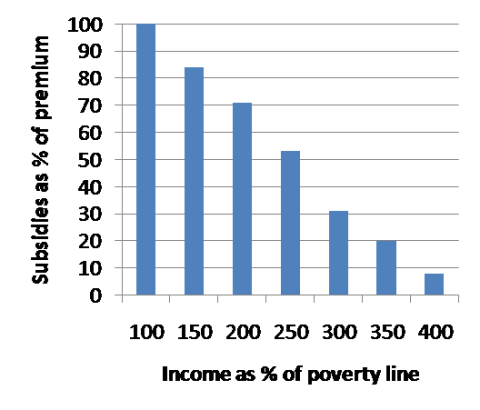
For people on the left who think this is all a big nothing, consider the subsidies. From the Kaiser Health Reform Subsidy Calculator, here’s the percentage of insurance premiums on the individual market that would be covered by subsidies at different levels of income measured as a percentage of the poverty line (all calculations are for a family of 4 headed by a 40-year-old):

DESCRIPTIONKaiser Family Foundation

Guys, this is a major program to aid lower- and lower-middle-income families. How is that not a big progressive victory?

For people in the center who worry, as my colleague David Brooks puts it, that there may be unintended consequences if you “centrally regulate 17 percent of the economy”: um, it’s a little late for that.

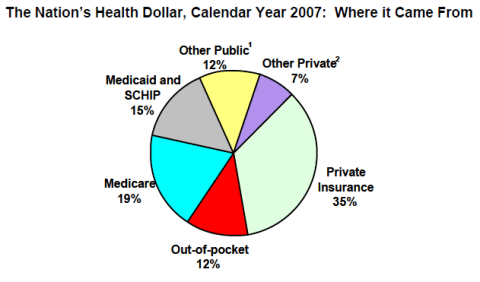
First of all, government insurance programs — Medicare, Medicaid, and smaller programs like the VHA, already pay more bills than private insurance companies:

DESCRIPTIONCenters for Medicare and Medicaid Services

And even the private insurance is overwhelmingly provided through employers — and employment-based insurance is only tax-free unless it obeys extensive regulations. Not coincidentally, those regulations resemble, in a qualitative sense, the goals of the new health reform: employers have to offer the same policy to all their employees, which in effect rules out discrimination based on medical history and subsidizes lower-paid workers.

The point is that we don’t have anything resembling a free market in health insurance — nor should we. Reform is filling in the gaps in the subsidized, regulated system we already have — which should calm centrists — in a way that offers big benefits to those most in need — which should please progressives.

Do the math.

Friday, December 25, 2009

If you ever need to warm your hands by the fire: "WPIX Yule Log" (video)


mabino, video (02:00).

GRITtv: Not so Happy "Holidays with Harry Shearer, and Music as Labor" (video)


GRITtv, with video (56:00):
Happy Holidays from all of us at GRITtv. While you’re sitting down with family–or celebrating alone–or not celebrating at all, we’ve got a special show for you to enjoy tonight.
You may know Harry Shearer best as the voice of Ned Flanders or Mr. Burns on The Simpsons. Maybe your first exposure to him was in This Is Spinal Tap. But did you know that he was a child star, a journalist and a teacher? Did you know that he’s working on a documentary about why New Orleans flooded after Hurricane Katrina? Or that he’s got a live concert DVD with other Spinal Tappers Christopher Guest and Michael McKean? Neither did we, until he sat down with Laura for a chat before the holidays.

Ganessa James and Mary McBride both stopped by our studio recently to perform for us. To help celebrate, we bring you additional songs they recorded just for us.

While we’re talking about music, the digital music revolution has made a lot of changes in the way musicians create and distribute their music. The line between laborer and entrepreneur has been blurred. Stanley Aronowitz, professor of sociology and cultural studies at CUNY joins two musician/activists, Mark Ribot and Morley, in studio to discuss music as labor: the pitfalls of organizing and the trouble with the digital music age.

Finally, we also have another performance by Morley, and Laura weighs in on who’s been naughty and who’s been nice.

Howie P.S.: Shearer and I have at least two things in common: we both are Jewish and majored in political science at UCLA. We have met briefly on several occasions and I can tell you a few things you may already suspect:
1. I am taller than him.

2. He is smarter, funnier, more talented and richer than me.

"Obama will 'recharge' on Hawaii vacation" (with video)


Honolulu Advertiser, with video (07:54).

Howie P.S.:
More video, (02:04) from KITV (Honolulu)

Red State Update: "Vaporizer For Christmas" (video)


Red State Update, video (04:00):
What does Dunlap want from Santa Claus? A vaporizer! He wants one so bad he breaks into a rockin' Christmas song that desecrates a beloved holiday with the glamorization of drug use. Feliz Navidad!
Howie P.S.: Preemptive apologies to any who are offended. This video is intended for entertainment only. No marijuana was consumed or injured in the sending of this message.

Thursday, December 24, 2009

Wendell Potter: Why I'm Not Joining the Call to "Kill the Bill"

Wendell Potter:
Like many people who hoped the stars had finally aligned for a fundamental overhaul of our health care system, I have been going through all of Elisabeth Kubler-Ross' stages of grief and loss -- denial, anger, bargaining, depression and acceptance -- as I've watched what has been happening in the Senate. I moved toward acceptance this morning as I watched the Senate pass its bill, but -- being an incurable optimist -- I'm still hopeful that the legislation can be improved when Senate and House conferees meet to determine what the final bill will look like.
But even if all the problems of the Senate bill can't be fixed in conference, Congress must send the president a bill to sign -- and soon. My position on this puts me at odds with many of the wonderful reform advocates I have met in the six months that have passed since I switched sides in this national debate -- going from being a spokesman for the health insurance industry to being a vocal critic of it -- in testimony before Senator Jay Rockefeller's Commerce, Science and Transportation Committee last June.

Over the past few days, some organizations that have worked so hard for many years for comprehensive reform, especially those that have advocated for a single payer system like Canada's, have joined groups on the opposite end of the political and philosophical spectrum in calling for defeat of the legislation. "Kill the Bill" is in the subject line of many emails I've been getting lately.

I understand their frustration, but I believe that when they stop and think about the real consequences of what they demanding, they will realize that for all its disappointing compromises and flaws, even the Senate-passed bill should be viewed as a foundation that can be built upon in years to come. Ted Kennedy, who advocated for a "Medicare for All" type system before many of today's activists were born, would truly have been proud of this beginning. He would not have liked everything about the bill, that's for sure, but he understood what it means to live in a political world and that compromises -- even big ones -- almost always have to be made on the journey toward an ultimate destination.

We will not be arriving at that final destination with the bill that reaches the president, but we have started the journey. Progressives must keep in mind that even leaving the station has not been a possibility for 15 years. We must not forget what happened in 1994 -- the last time we thought the stars had aligned -- when opponents of reform prevailed. We must also not forget that many of the reforms in the Senate and House bills are critically important. Yes, insurance companies likely will try to game the system in their relentless quests to meet Wall Street's expectations, but many of the practices they have used for decades to do that will become illegal. We also must not forget the importance to lawmakers of the future of having a foundation to build upon. They will not have to start from scratch as current and past lawmakers have always had to do. And future lawmakers will be able to fix problems not addressed by this legislation as well as the unintended consequences that inevitably will arise.

Among the other wonderful people I have met over the past six months are people who were denied coverage -- or lost it -- because insurance companies had decided they had disqualifying "pre-existing conditions." Others, many with chronic conditions, lost coverage when they lost their jobs and have no idea how they will be able to eat, pay the mortgage and buy the medications necessary to stay alive. They are scared, and they are desperate. The stories I have heard have been heartbreaking. I just wish my former corporate colleagues, the tea baggers who tried to shut down even consideration of reform, and the "Kill the Bill" liberals could have been my traveling companions. I'm sure many of them, even the liberals who think we can wait until we can get more perfect reform, would have been stunned to hear the compelling evidence that the country they love, the country many opponents of reform continue to insist has the best health care system in the world, lets this happen to their fellow citizens. Looking people in the eyes as they tell their stories makes you understand in ways you couldn't before just how crucial it is to act now.

After speaking in Omaha and Des Moines at the end of last week, and hearing more heartbreaking and maddening stories, I flew to Tennessee to visit my parents. They had to move to an assisted living home over the summer after Dad fell and broke his arm, so I try to get down there to check on them as often as I can. I nearly panicked when I couldn't find them when I got there. Their bedroom was cold. I eventually discovered them, covered in blankets, in the common living room. Dad was sitting in the big recliner he had brought from home, so big it takes a lot of effort to get from one place to another.

I learned that the building had lost heat during the snowstorm the night before -- and that Eddie the maintenance man had gone to the considerable trouble of hauling Dad's chair to the living room so that Dad would be more comfortable.

When Eddie took me aside and whispered that he wanted to talk with me about something, I was afraid he was going to give me some bad news about Mom or Dad. Instead, he told me that he had recently lost his health insurance when his employer at his second job laid him off. He had been able to get coverage for himself since then, but not for his wife. He asked me if I could help.

For the first time I had an idea of what it must be like for a doctor to tell a patient with a terminal illness that there is nothing he can do. I wish I could have given Eddie some encouraging news and some suggestions of where to look for insurance, but the reality is that his wife probably will not be able to get coverage in the United States of America unless she gets lucky and is hired by a company that offers benefits.

If Congress doesn't pass reform legislation, Eddie's wife might never again have health insurance. It is probably more likely, in fact, that she will be among the 45,000 Americans who die every year -- 12 every day -- because they don't have insurance. So even though the Senate bill is far from being the bill of our dreams, it will help people like Eddie's wife. It might even save her life.

It is tempting to join the "Kill the bill" folks, but it would amount to cutting off our noses to spite our faces. Big Insurance and Big Pharma will not be running out of money anytime soon to spend on manipulating public opinion and influencing votes on Capitol Hill. Part of every premium dollar we send to our insurance companies, and part of every dollar we pay when we pick up our prescriptions, end up in corporate piggy banks that overpaid executives tap to hire armies of lobbyists and PR firms whenever their profits are being threatened. These giant corporations and their trade associations have been saving up and preparing for this debate for years. I know because I used to be part of it.

Reform advocates do not have such an endless supply of money. After this long fight, their resources are already dwindling. Over the past several weeks, opponents of reform have been able to spend twice as much as reform advocates on advertising. And the opponents' ads are part of a campaign carefully and disingenuously crafted by the best PR and advertising people money can buy to scare people away from the very reform that would benefit them most. So it is little wonder that polls show Americans are having second thoughts about reform.

Although the effort to achieve health care reform has been arduous and ugly, progressives can't merely brush off their hands, move on to other issues and hope the stars will align again for "real" reform. When you stop and think about the bottomless pot of money that health insurance companies constantly replenish by diverting part of our premium dollars away from paying for medical care, it is in some ways remarkable that we have accomplished as much as we have with this legislation.

So instead of sending more "Kill the Bill" emails, we need to turn our attention now to leaders in the House, insisting they stick to their guns on important elements of their bill and improve on what the Senate has passed. It will not be easy to merge the two bills to the satisfaction of reform advocates, but at the very least the House should add language to strengthen the regulation of insurance companies and close the loopholes that would allow them to circumvent the intent of the legislation.
There will be plenty to do later -- including paying close attention to how this legislation is implemented, changing the way the Senate conducts its business and getting real campaign finance and lobbying reform enacted -- but let's get this part done now. Millions of people are counting on it. Many of them won't live to see the next debate if we do exactly what the opponents of reform hope we will do, and that is to join them in trying to "Kill the Bill."

"In (Very Reluctant) "Defense" of the Insurance Mandate"

(click on the chart above for larger version)
Joshua Holland (Alternet):
I have no interest in defending the mandate that individuals buy an insurance policy. I think it's self-evident that coercing people to shell out their hard-earned cash to Big Insurance is a distinctly sucky thing.

So I won't.

I do, however, want people to take a deep breath, and at least have a serious discussion of the policy without all the hand-wringing and hyperbole that have been flying around of late.

I used to labor under the naive delusion that liberals tended to be rationalists -- sometimes too nerdy in their reliance on factual arguments -- and conservatives were the ones who appealed to our basest emotions, our fears. Thankfully, the health-care debate's set me straight on this.

Over at FireDogLake, they have a petition to kill the Senate bill. It has one of those list of ten reasons for doing so. The first:

Forces you to pay up to 8% of your income to private insurance corporations - whether you want to or not

When I read that, I had to think hard about what it is they were talking about -- there's certainly nothing in any bill I've read that says you have to pay 8 percent of your income to the insurance companies whether you want to or not.

It turns out to be some Death-Panel quality spin. What are they actually talking about? The Senate bill requires everyone to have insurance, or pay a penalty. But, if the cost of getting insured exceeded 8 percent of your income, then the fine would be waived.

The maximum penalty is 2 percent of adjusted income, which is probably around 1.4 percent or so of the average person's gross pay. That money would not go to "private insurance corporations," but would in fact defray the costs of the uninsured on our public health system.

Or consider the following from David Sirota's column in USA Today:

Worst of all, it doesn't actually extend "new coverage" to 30 million more Americans. Through the "individual mandate," it simply makes people criminals if they don't buy expensive insurance from the private corporations that helped create the health care crisis in the first place.

Again, I'm not defending the mandate so much as calling David out for pushing the idea that people who didn't buy insurance would be "criminals" -- that kind of rhetoric could appear in Townhall or The National Review or some wing-nut blog. Obama's Gestapo will put you in a FEMA camp if you don't carry health insurance!

The big problem as I see it is that lot of people are discussing this policy in isolation, free of context. And I think the most important bit of context is this: we're not discussing a mandate alone -- it comes with subsidies that make coverage much, much more affordable for working people. Consider some numbers for the Senate bill -- again, much weaker than the House's -- that my colleague Daniela Perdomo brought to my attention the other day:

(click on the chart above for larger version)

So we're mandating that people carry coverage while decreasing the costs of that coverage by up to 90 percent for the working poor, and 20 percent for a family making $85K.

Another thing to keep in mind is that we can't forbid insurers from denying coverage based on previous conditions -- something that absolutely everyone (except for the insurers themselves) believes is necessary without mandating that people carry insurance. If we did, no healthy person would have a policy -- why would you pay premiums if you could just buy a policy once you become ill?

Another piece of context that I think is missing is this: right now, if your family's covered through an employer and you pay taxes, you are already paying approximately $1,000 dollars each and every year for the uninsured.

Individuals without coverage cost us all money, and that's one reason why I don't understand everyone getting quite so upset about asking them to pick up a small part of the tab. We hear a lot about how young, healthy people would be forced to buy insurance against their will. But while every 21 year-old thinks he or she is immortal, they're wrong. Insurance is about risk, not likelihood, and young, healthy people get hit by buses, come down with illnesses and rack up huge bills they can't afford in emergency rooms every day. And when they do, you and I end up paying for it.

Another thing I keep hearing is that the mandate will be so unpopular that it will provoke a revolt and return the Bushites to power forever. Taibbi, for example:

This individual mandate that's going to force people to become customers of private health insurance companies, the Democrats are going to end up owning that policy and it's going to be extremely unpopular and it's going to be theirs for a generation. It's going to be an albatross around the neck of this party.

I agree that the timing of these reforms -- with benefits delayed several years only to keep budgetary costs down and assuage the Blue Dogs -- is going to be a political nightmare in 2010 and 2012. But the idea that the mandate, in tandem with those subsidies, are going to be wildly unpopular is, as far as I can see, a dubious proposition at best.

There are something approaching 50 million people without health insurance in the U.S. Either you believe that a large number of those people are just rugged individualists who really hate the idea of being covered, or you believe that most want insurance but are priced out of the market. I think the latter is most often the case.

With that in mind, let's consider for a moment who it is that would likely be outraged by this policy. I've come up with this: young and healthy conservatives who have a good middle-class job that doesn't provide health benefits.

Anyone with half-way decent coverage from their employer or a public program like Medicare -- still the majority of Americans -- would be unaffected by the policy, and therefore pretty unlikely to revolt.

Those who earn less than 4 times the federal poverty line would see their premiums go down -- quite dramatically on the lower end of the income ladder. Many will be able to afford at least half-way decent coverage for the first time. These folks are also unlikely to revolt.

Those who work free-lance, are self-employed, have a part-time job or a job without health insurance would, for the first time ever, be able to buy decent plans at a cost that an employee of a large corporation might expect to pay. These people would arguably get the best benefits out of the package, and will probably be pretty pleased at the end of the day.

If you're a liberal-minded person in a family earning more than $85,000, then you probably aren't going to be all that furious about seeing your tax bill rise by $800 per year in order to beef up the public health-care system.

So, that leaves us with young me-first conservatives who make over 400% of the poverty line, and work freelance or have a job without health-care. Screw 'em. They're always pissed off anyway.

Finally, let me just say how annoying it is to hear people rant about the billions that will end up in the pockets of the insurance companies without even acknowledging that those dollars would be covering 31 million people who would otherwise lack it in 2019. Perhaps we might keep in mind that having health insurance is a good thing -- the insured are more likely to get preventive care, more likely to have dangerous conditions diagnosed early -- when they're more readily treated -- and less likely to die.

You may well believe that there's this massive population in the U.S. who can afford coverage but go without simply because they like the insecurity of knowing that they're screwed if they get sick, but I think that's the worst kind of bullshit.

Equally obvious is that this is a rather convoluted way to get to a not-quite-but-almost universal health-care system. But in the context of the approach that's on the table right now, it's at least arguably a necessary evil. Maybe it isn't, but it'd be nice to have that discussion without the kind of demagoguery that we've come to expect from the right.

"Mele Kalikimaka" from Paris, France (video)


ParisUkuleleHui, video (04:08):
KrRrK playing Robert Alex Anderson's song Mele Kalikimaka before we learn to play all together tonight.
Howie P.S.: I used to think the ideal lifestyle was half-time Paris, half-time Hawaii.

"Obama 'Absolutely' Will Help Merge Health Care Bills" (with video)


HuffPo, with video (01:25):
While many Americans are wrapping gifts, President Barack Obama is pledging to personally wrap up health-care reform.

The Senate expects to pass a health care bill on Christmas Eve, and Obama told PBS's Jim Lehrer that he would 'absolutely' take a hands-on role in merging it with the House version.

"We hope to have a whole bunch of folks over here in the West Wing, and I'll be rolling up my sleeves and spending some time before the full Congress even gets into session," he said.

This comes after the president has taken some criticism for being too passive and allowing too many aspects of health care reform to be compromised. He responded to those charges in an interview with the Washington Post:

Throughout the health-care debate, the president has declined to weigh in with specific preferences. The tactic has exasperated his supporters, but his advisers have deemed it key in keeping the bill moving through a balky Congress. Obama called the public option his preferred choice to ensure broad coverage and provide cost-cutting competition to the private insurers. But he has never demanded that it be part of a final bill.

"We don't feel that the core elements to help the American people have been compromised in any significant way," Obama said. "Do these pieces of legislation have exactly everything I want? Of course not. But they have the things that are necessary to reduce costs for businesses, families and the government."

Speaking about his decision to finally roll-up his sleeves, Obama told Lehrer:

Right now there are families who don't have health insurance and, as a consequence of somebody getting sick in their family, have been bankrupt. Right now there are small businesses who've been doing the right thing by their employees and just got a notice from their insurance companies that their premiums went up 25, 30, 40 percent; and that business owner's having to make a decision, do I start dropping coverage for my employees or do I have to lay off one employee to keep coverage for everybody else?
Howie P.S.: Trudy Lieberman, contributing editor to the Columbia Journalism Review, and Rep. Raul Grijalva (D-AZ), co-chair of the Congressional Progressive Caucus dig into the details of the Senate bill and the upcoming conference committee process, video (Democracy Now!).